Inside Jinghui
From a 600 m² Workshop: Jinghui’s Plastic-Shell Cooler in 2003
A look at Jinghui’s development of an injection-moulded polypropylene enclosure and its growth from a Mawei workshop to larger-scale production.
Rethinking the enclosure in 2003
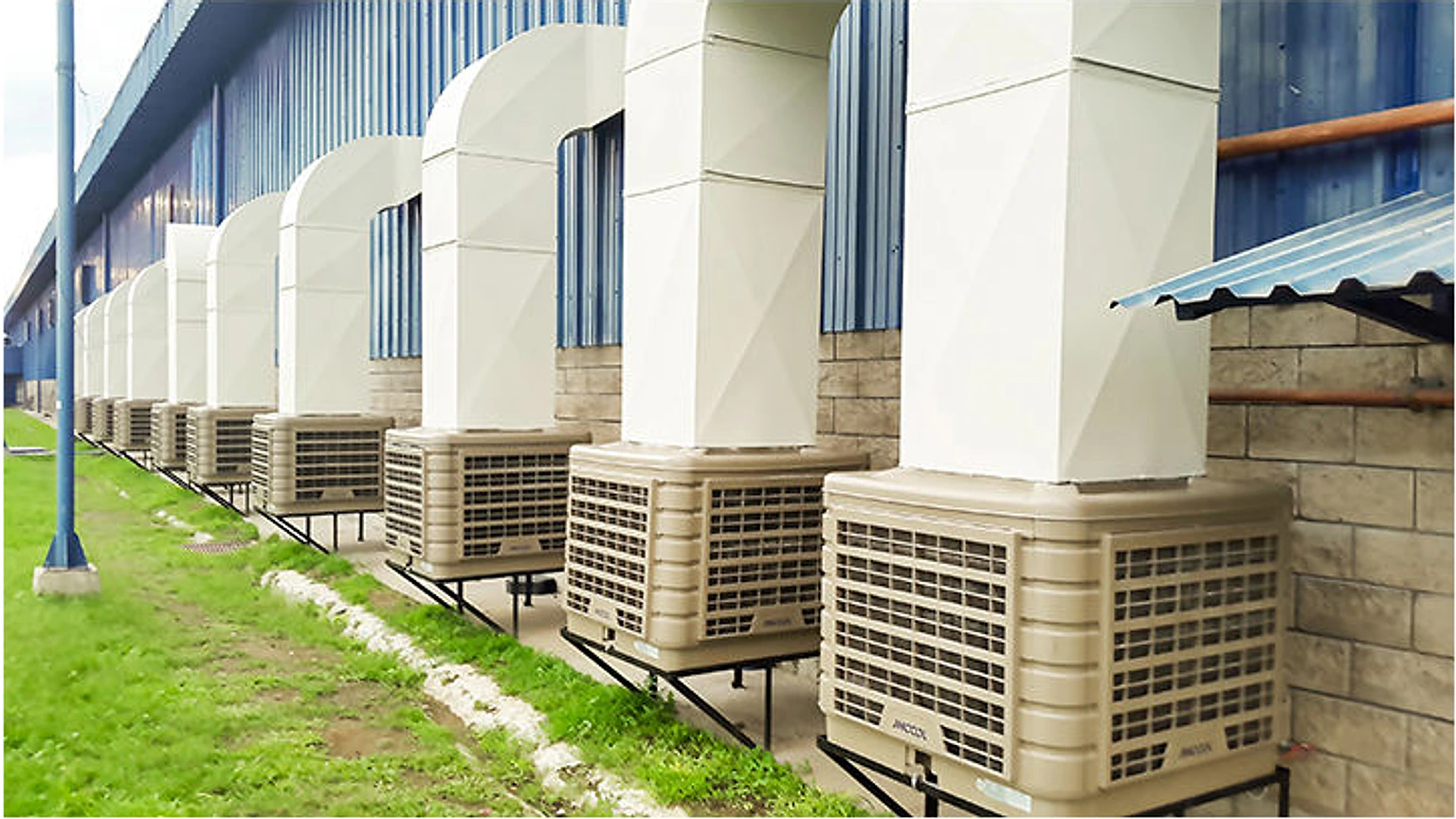
In 2003, Jinghui's founder and a small development team in Fuzhou focused on the enclosure of the evaporative cooler. Galvanised steel housings, riveted joints, forward-curved centrifugal fans and cellulose cooling pads were common configurations, with weight, corrosion and noise among the concerns.
The team chose a one-piece injection-moulded polypropylene enclosure, using integrated clips and moulded structures to reduce metal fasteners and riveted joints. Pads, fans, water distribution and float valves remained established components. Development centred on the housing material and structure.
What changed with the material
According to the company, early comparisons and trials covered four areas:
- Weight. A steel-shell cooler rated at 30,000 m³/h weighed 78 kg, compared with 41 kg for the plastic-shell prototype. The reduction made transport and handling easier.
- Corrosion resistance. In a 2003–2004 Panama Canal trial, the company observed white rust at steel-housing joints while the plastic enclosures retained their appearance. The team continued to focus on performance in coastal and humid environments.
- Noise. The company reports a reduction of 3–4 dB at a distance of 1 m in its comparison, supporting use in more noise-sensitive settings such as restaurants.
- Tooling investment. Injection moulds required substantial initial investment. The company says the tooling cost allocated to each unit fell significantly after 8,000 units, with the project reaching break-even in 14 months.

Growing beyond the Mawei workshop
Company records describe first-year shipments of 1,200 units from a 600 m² workshop in Mawei. In 2006, production moved to a 4,000 m² facility, a second injection-moulding line was added, and the first 20-foot container was shipped to a Saudi Arabian buyer. By 2012, the company reports sustained output above 10,000 units a month.
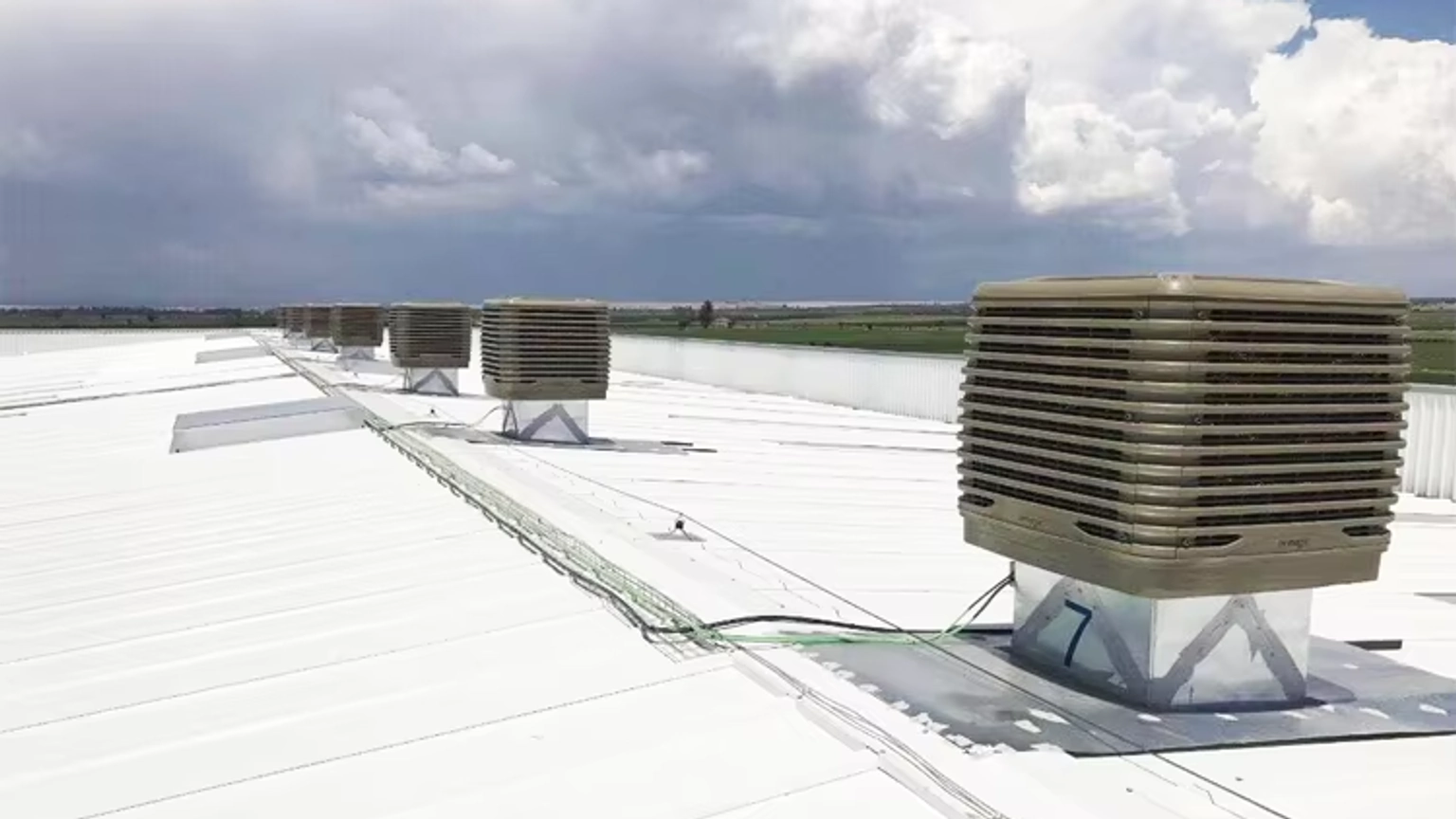
Lower weight, reduced noise and improved corrosion resistance supported expansion into inland Africa, the Middle East and South America. Applications broadened from factories to restaurants, hotels and smaller commercial premises. The company offered a three-year warranty in coastal markets at that stage.
A continuing development approach
Jinghui continues to use established pads, fans, pumps and float valves, with some supplier relationships extending beyond 15 years. Improving a key material or structure while retaining mature components remains part of the company's development approach.
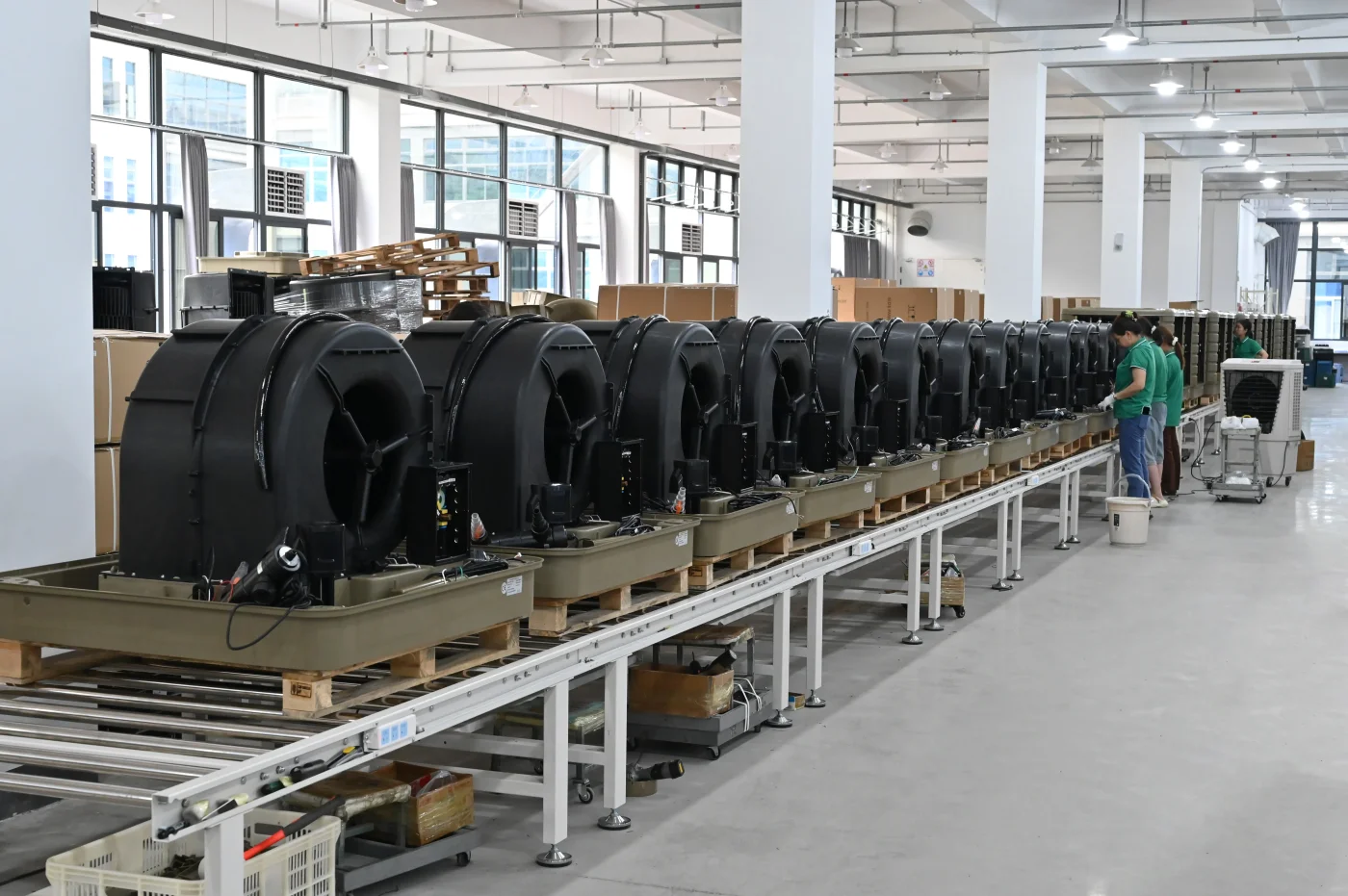
Production and products in 2026
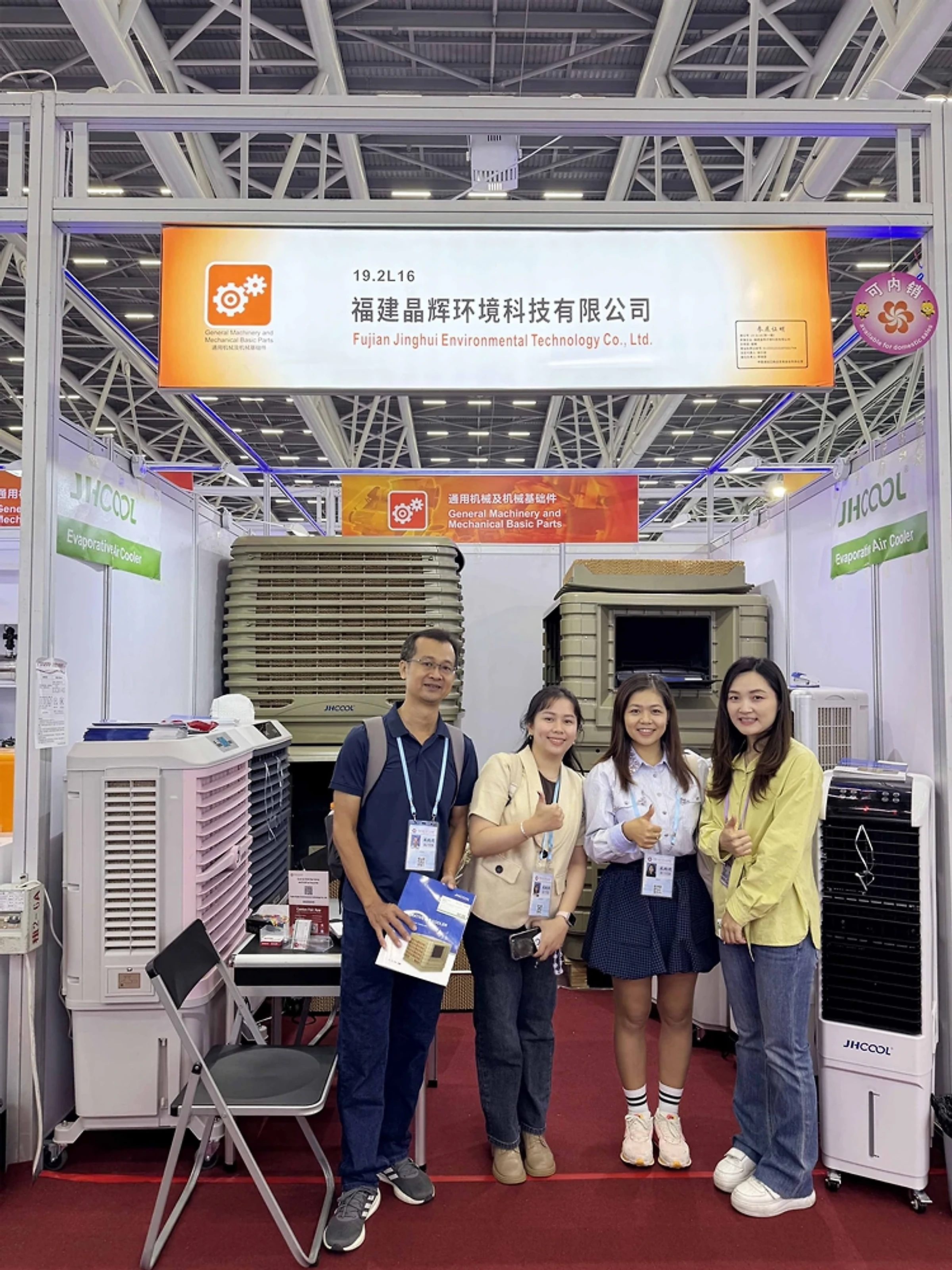
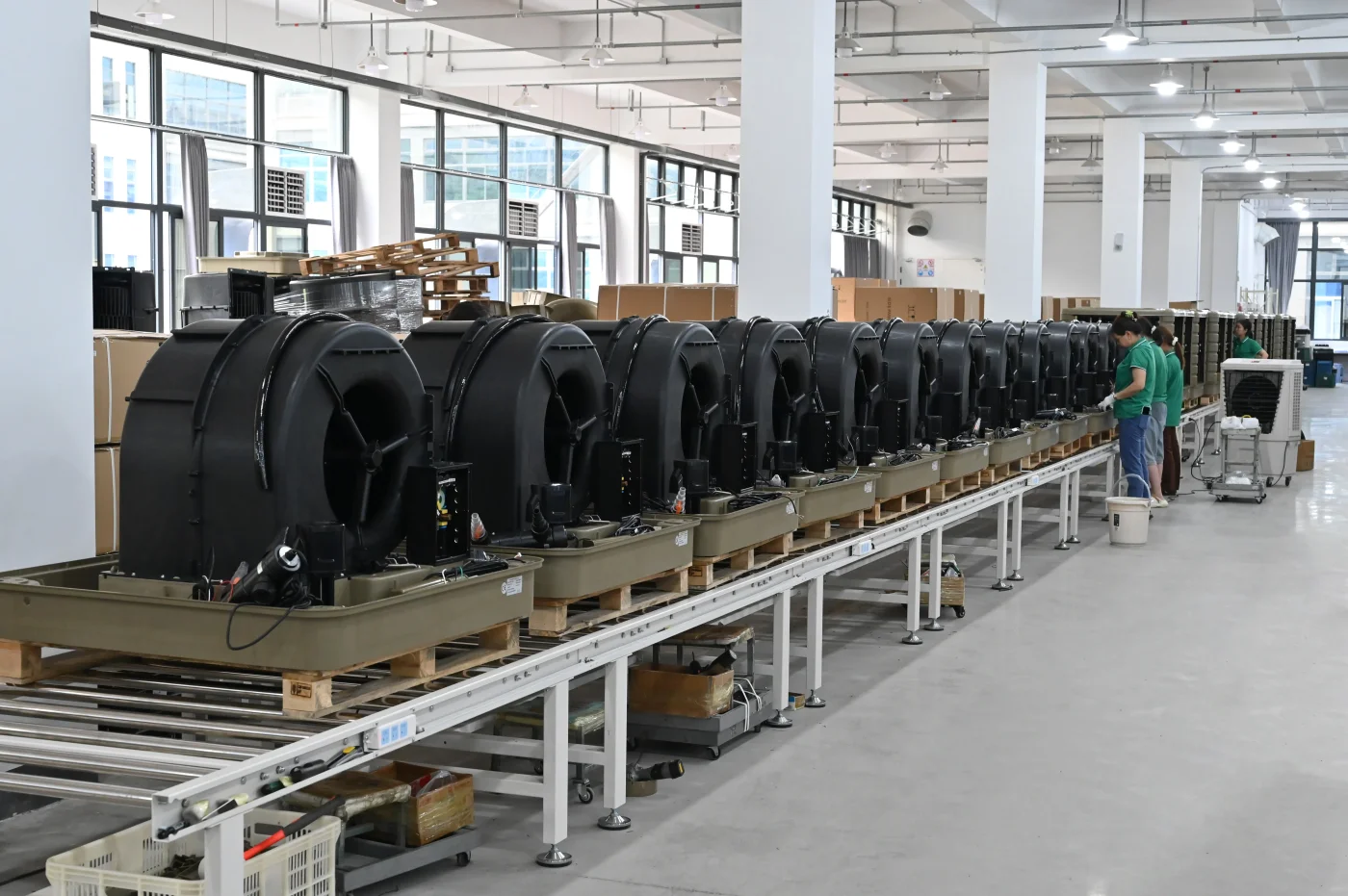
According to company information, Jinghui operates a 30,000 m² manufacturing campus in Fuzhou with an evaporative-cooling production line and in-house injection moulding. It reports 28 development engineers and more than 50 active patents. The company holds TÜV verified manufacturer status and supplies more than 100 countries through direct business relationships, Alibaba Gold Supplier channels and regional distributors.
The company describes the JH-30 plastic enclosure as its fourth generation, with improved tooling and tolerance control. The warranty for the model described has increased from one year to five years. The 2026 model reportedly shares about 60% of its components with the 2003 prototype, retaining the core design approach.
Factory-tour videos, TÜV verification documents and sample information are available by contacting Jinghui. The company states that it responds within one business day.